
Maine crane rental has to account for more than the lift itself. Distance, coastal access, rural job sites, equipment mobilization, and changing site conditions can all affect how the work needs to be scheduled.
Heavy lifting in Maine can look completely different from one project to the next.
A crane working near Portland may be handling commercial mechanical equipment with relatively easy highway access. A marine project along the coast can involve large fabricated components moving through an active waterfront property. Farther inland, manufacturing facilities, forest-products operations, utilities, and agricultural sites may need equipment mobilized a considerable distance before work begins.
Wide Load Shipping coordinates crane rental in Maine around the actual project rather than treating every lift the same. We look at the load, working radius, setup area, ground conditions, rigging requirements, transportation plan, and the amount of room available once the equipment reaches the site.
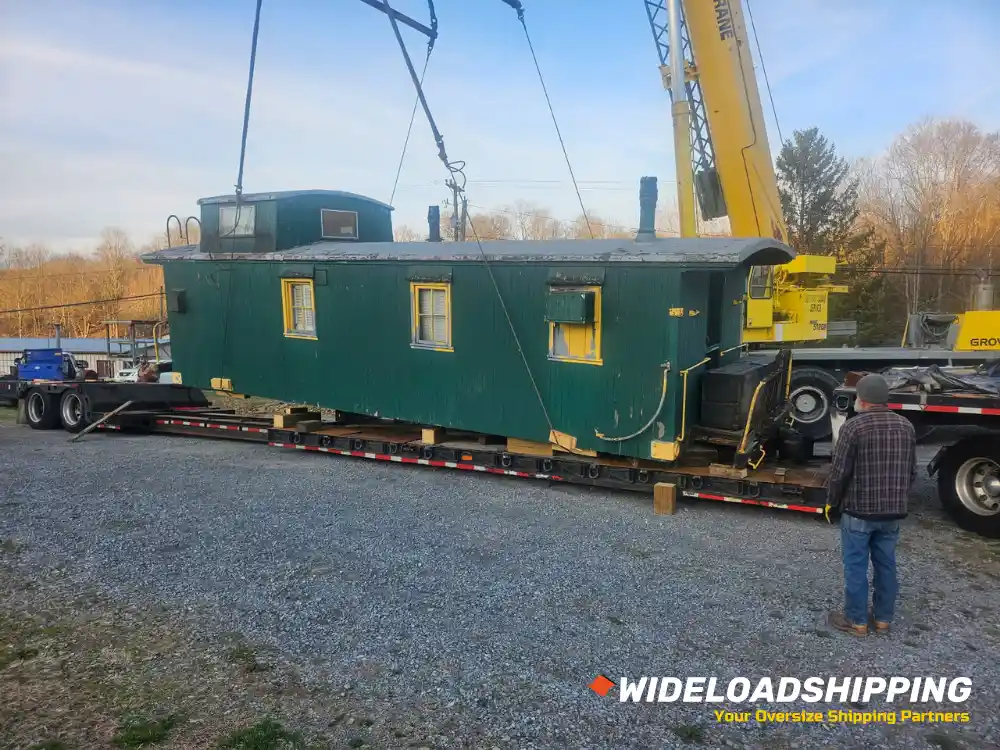
That matters when machinery is arriving on a heavy-haul trailer. If the transport and crane schedules are planned together, the equipment may be able to move directly into the installation sequence instead of being unloaded somewhere else and handled again.
Maine identifies forest products, life sciences, marine and aquaculture, and food and agriculture among the industry clusters with significant growth potential.
Call (877) 765-3574 to coordinate your Maine crane rental.

Don't let logistics slow you down, we handle it all from permits to pickup. Speak to a live specialist today.
Maine’s crane demand is closely tied to industries that rely on large physical equipment. Forest-products operations use processing machinery and material-handling systems. Marine projects require structural and mechanical lifts. Food and agricultural facilities need tanks, production equipment, refrigeration systems, and conveyors installed or replaced.
The state continues to support forest-products development and the redevelopment of manufacturing and industrial sites, which helps sustain demand for equipment installation and facility work.
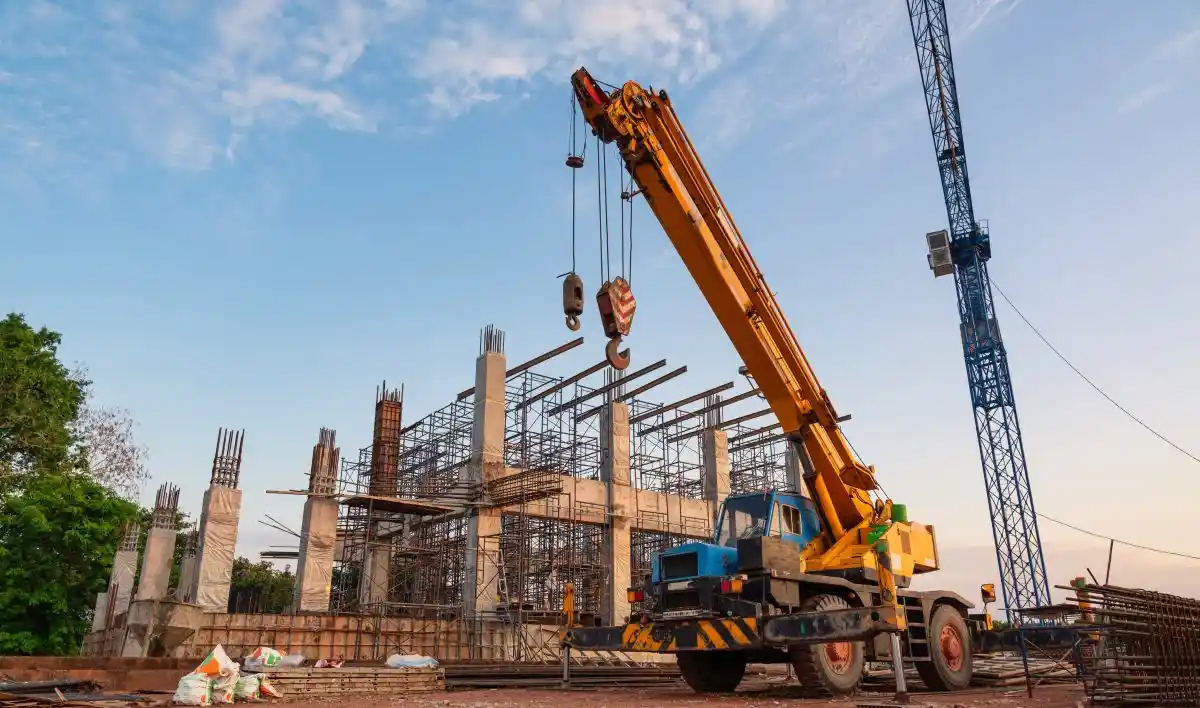
Maine projects can require very different crane configurations depending on the location and the available setup area.
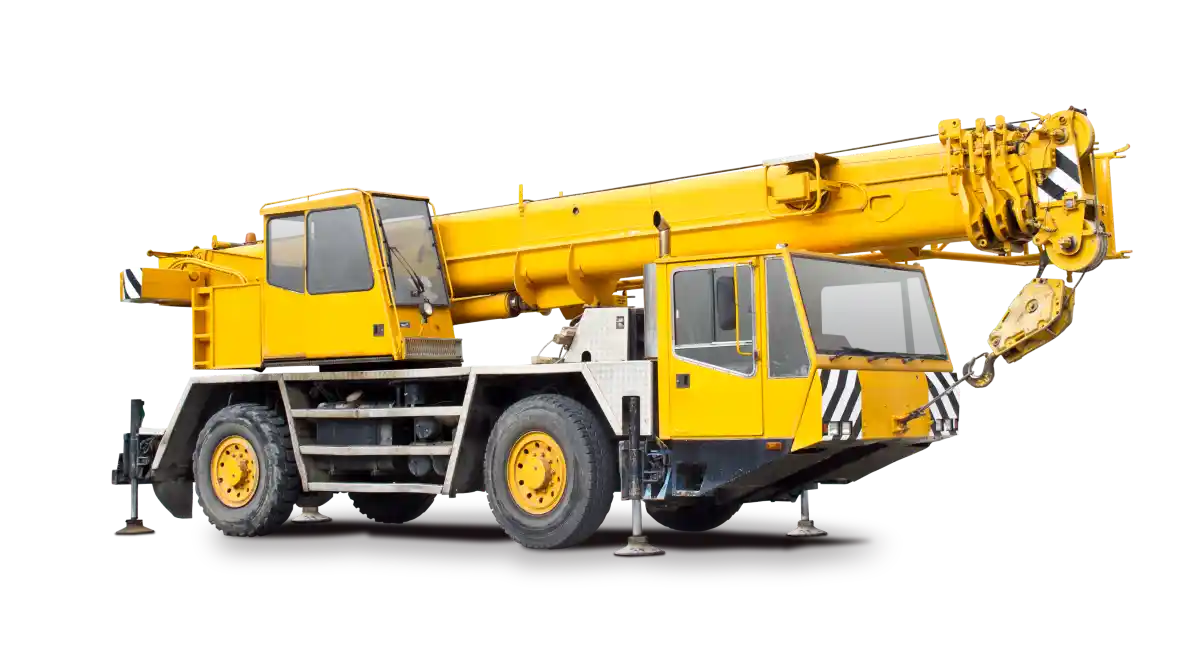
A mobile crane may work well on an open commercial site, while an industrial or marine project could require rough-terrain, all-terrain, crawler, or compact equipment better suited to the access conditions.
What Is Rigging?
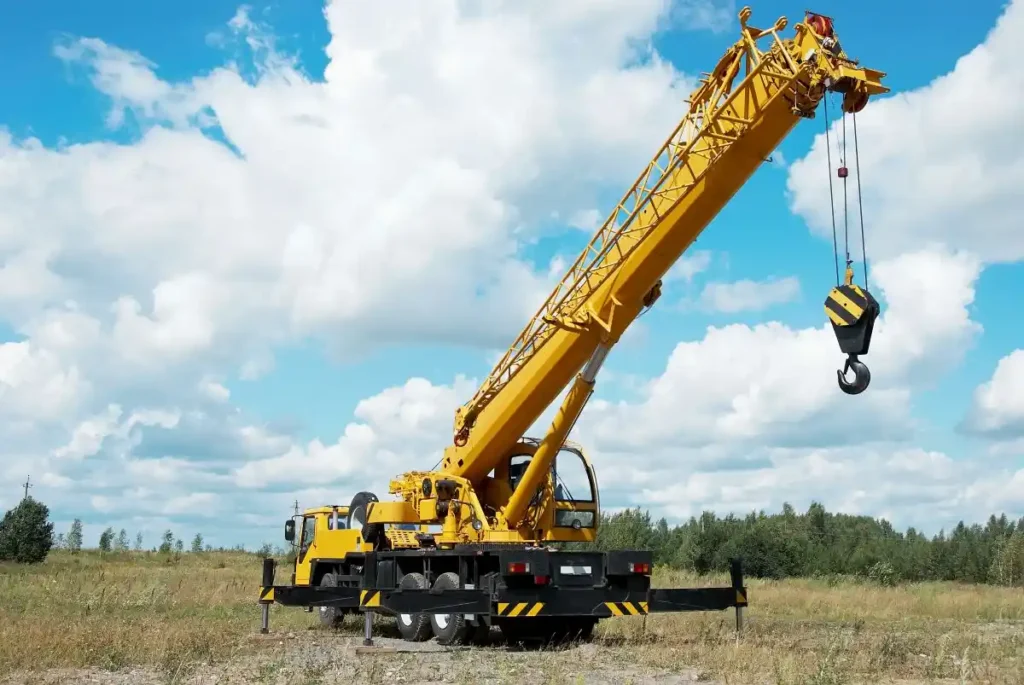
Rigging controls how the crane supports the load throughout the pick.
A long marine component may need several lifting points to prevent unwanted flex. Processing machinery can have an uneven center of gravity. A tank may need to remain upright while being transferred from a trailer to its foundation.
Each of those situations requires the rigging to match the equipment.
The plan should account for the load weight, approved lifting points, center of gravity, sling angles, clearances, orientation, and how the equipment needs to move between the initial pick and final placement.
Maine projects can involve several hours of transportation before a machine reaches the crane.
Planning the trailer position and rigging arrangement before delivery can reduce rehandling once the equipment reaches the property. That is especially useful at coastal and rural sites where there may not be much room for temporary storage.
| Crane Type | Typical Rental Duration | Estimated Rental Price |
|---|---|---|
| Boom Truck Crane Rental | 1–7 Days | $850–$2,600 per day |
| Mobile Crane Rental | 1–14 Days | $1,100–$3,700 per day |
| Rough Terrain Crane Rental | 3–21 Days | $750–$2,900 per day |
| All Terrain Crane Rental | 1–30 Days | $2,700–$6,800 per day |
| Carry Deck Crane Rental | 1–14 Days | $500–$1,800 per day |
These figures are intended for early project budgeting rather than as fixed statewide rates.
Travel distance can have a noticeable effect on Maine crane rental pricing. A crane already working in southern Maine will have a different mobilization profile from equipment heading to a coastal, northern, or rural industrial site.
Operator time, rigging, support trucks, counterweights, permits, setup requirements, and the amount of time the crane remains committed to the job can also change the final price.

| Crane Type | Typical Rental Duration | Estimated Monthly Rental Price |
|---|---|---|
| Mobile Crane Rental | 1–3 Months | $9,000–$21,000 per month |
| Rough Terrain Crane Rental | 1–4 Months | $7,500–$16,000 per month |
| All Terrain Crane Rental | 2–6 Months | $19,000–$42,000 per month |
| Crawler Crane Rental | 3–12 Months | $22,000–$70,000+ per month |
| Tower Crane Rental | 6–18 Months | $15,000–$36,000+ per month |
Keeping a crane assigned to a Maine project can make sense when the work includes repeated picks over several weeks or months.
Industrial expansions, bridge work, utility construction, marine projects, and large commercial developments can all require crane support at multiple stages.
Review transportation, operator labor, maintenance, assembly, counterweights, inspections, rigging, and engineering responsibilities before comparing monthly rates.

| Maine City | Primary Industries Driving Crane Rental Demand |
|---|---|
| Portland | Commercial construction, marine work, healthcare, manufacturing |
| Bangor | Utilities, healthcare, regional construction, logistics |
| Lewiston | Manufacturing, healthcare, industrial facilities |
| Auburn | Manufacturing, distribution, commercial construction |
| South Portland | Marine activity, energy, logistics |
| Bath | Shipbuilding, marine manufacturing, industrial work |
| Augusta | Utilities, institutional construction, infrastructure |
| Biddeford | Manufacturing, redevelopment, commercial construction |
| Saco | Manufacturing, logistics, construction |
| Rockland | Marine services, harbor work, coastal construction |
Maine crane demand is spread across several smaller regional markets rather than concentrated in one metro.
Southern Maine provides broad construction and commercial demand. Coastal markets add marine lifting, while central and northern Maine have more utility, manufacturing, forest-products, healthcare, and infrastructure work.
That spread makes mobilization an important part of the planning process.
| Lift Application | Common Crane Capacity |
|---|---|
| Marine Structural Components | 100–500+ Ton Cranes |
| Forest Products Machinery | 60–300 Ton Cranes |
| Pulp and Paper Equipment | 80–300 Ton Cranes |
| Food Processing Machinery | 40–200 Ton Cranes |
| Utility Transformers | 80–250 Ton Cranes |
| Manufacturing Equipment | 60–300 Ton Cranes |
| Structural Steel Installation | 80–300 Ton Cranes |
| Bridge Work | 150–500+ Ton Cranes |
| Commercial HVAC Placement | 40–120 Ton Cranes |
| Industrial Tanks | 60–250 Ton Cranes |
These ranges are planning references, not final equipment recommendations.
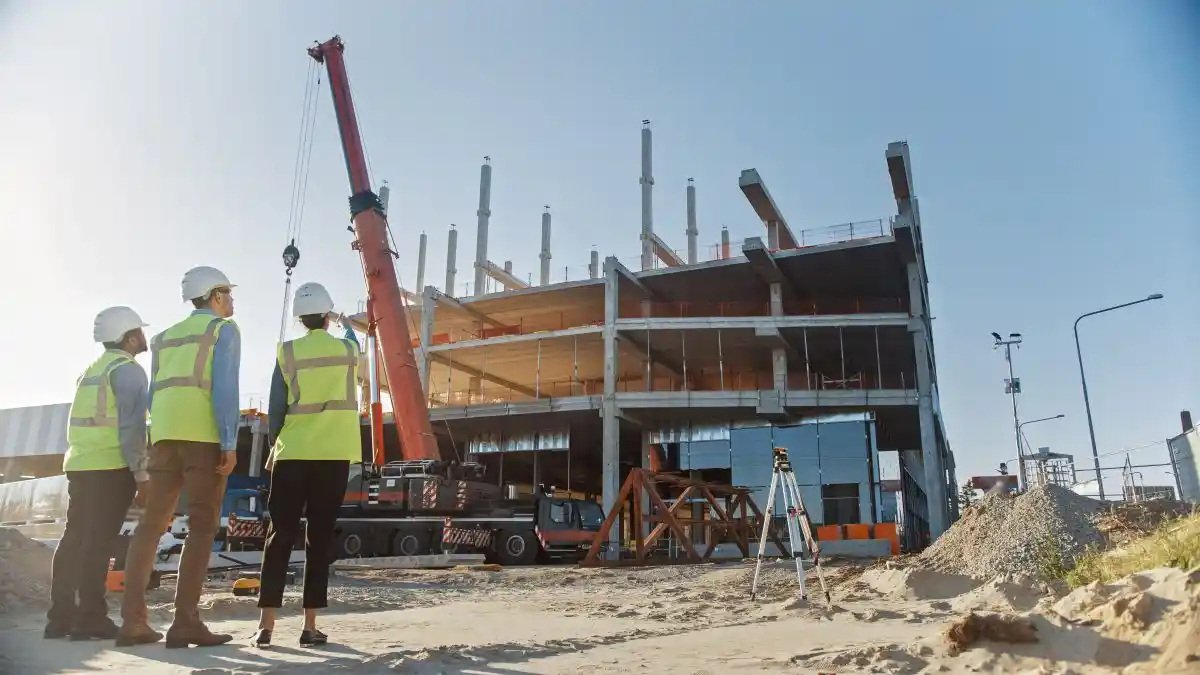
Crane size should be determined using the actual radius, lift height, crane configuration, setup location, ground conditions, and load data.
| Industry | Primary Crane Rental Applications |
|---|---|
| Forest Products | Processing machinery, material handling, facility improvements |
| Marine Industry | Fabricated sections, equipment, infrastructure |
| Life Sciences | Mechanical systems, facility equipment, construction |
| Food Processing | Tanks, machinery, refrigeration systems |
| Agriculture | Grain systems, processing equipment, storage systems |
| Aquaculture | Tanks, processing systems, marine equipment |
| Advanced Manufacturing | Production machinery, facility expansion |
| Utilities | Transformers, substations, electrical equipment |
| Renewable Energy | Mechanical and electrical equipment |
| Infrastructure | Bridges, transportation, public works |
Maine’s economic strategy continues to emphasize forest products, marine and aquaculture, food and agriculture, and life sciences, while state programs also support industrial redevelopment and forest-products innovation.
These sectors create crane demand when facilities expand, production systems are replaced, utilities are upgraded, or new equipment has to be moved into position.
| Service Type | Typical Scheduling Time |
|---|---|
| Emergency Crane Rental | Same Day, When Available |
| Standard Mobile Crane Rental | 24–72 Hours |
| Boom Truck Crane Rental | 24–48 Hours |
| Rough Terrain Crane Rental | 2–5 Days |
| All Terrain Crane Rental | 3–7 Days |
| Heavy Lift Crane Rental | 3–10 Days |
| Crawler Crane Rental | 1–2 Weeks |
| Tower Crane Projects | Several Weeks to Months |
| Operated Crane Rental | 24–72 Hours |
| Bare Crane Rental | 2–7 Days |
Maine’s geography can stretch these planning windows.
Routine work in southern Maine may be easier to schedule quickly. Larger equipment heading to a remote industrial, coastal, or northern site may need substantially more time for transport and support equipment.
High-capacity crane mobilization should be planned well before the requested lift date.
Yes. Crane rental can be coordinated throughout Maine, although larger or specialized equipment may require more lead time because of travel distance.
Yes. Structural sections, mechanical equipment, fabricated components, and other large marine loads can require crane and rigging support.
Yes. Machinery, industrial equipment, transformers, fabricated components, and other oversized loads can be coordinated with the crane schedule.
Yes. Processing machinery, conveyors, mill equipment, tanks, and maintenance components can require crane support.
When site access and the lift plan allow it, yes. Direct transfer can reduce unnecessary handling and staging.
Yes. High-capacity equipment can be mobilized for qualifying marine, infrastructure, industrial, utility, and heavy construction work.
Yes. Transformers, substation equipment, structural components, and other utility loads can require crane placement.
Provide the load weight and dimensions, project location, setup area, final placement point, expected working radius, lift date, access information, and any known rigging requirements.
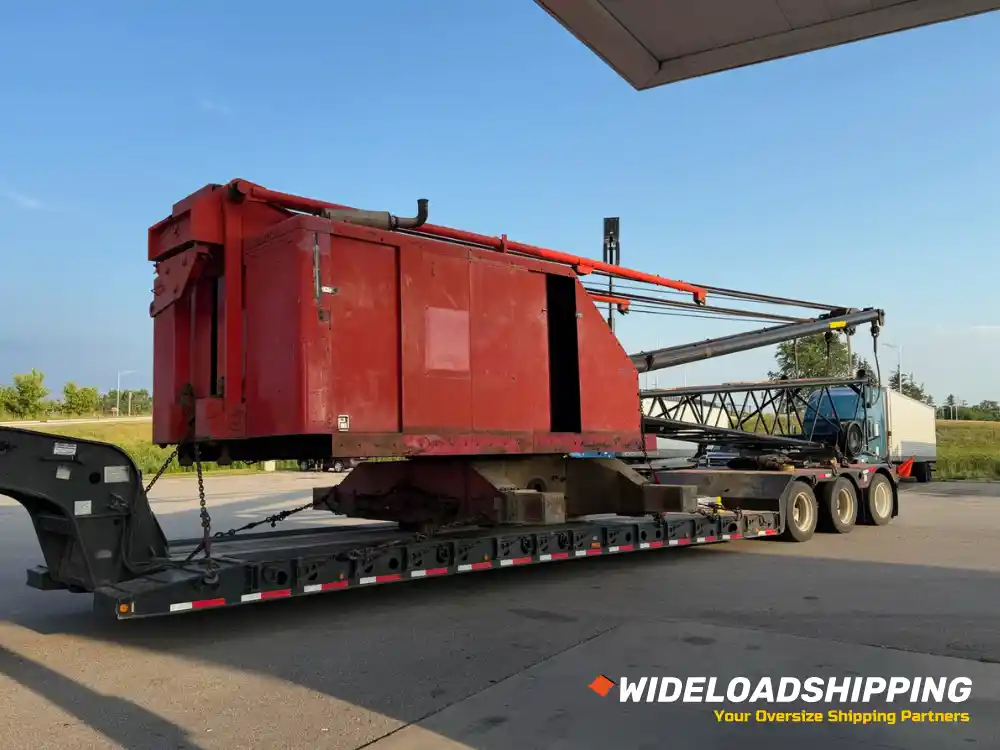
Distance can turn an otherwise straightforward Maine lift into a scheduling problem.
The load may be coming from one direction while the crane is mobilizing from another. A rural site may not have space to store machinery overnight. A marine project may have a narrow period when the work area is available.
Wide Load Shipping can coordinate those movements before the equipment starts traveling.
By connecting the heavy transport with the crane and rigging schedule, we help your crew move from pickup to placement without adding unnecessary handling or standby time.
Call (877) 765-3574 to coordinate your Maine crane rental.

Our service area pages are still being added, but our coverage is already nationwide. Contact us at (877) 792-5056