Maryland crane rental has to work inside crowded job sites, active transportation corridors, and facilities where the available lift window can be shorter than the equipment move itself.
Maryland puts a wide range of crane-intensive industries inside a relatively small geographic area.
Life sciences facilities, advanced manufacturing, defense-related operations, ports, hospitals, commercial construction, utilities, and infrastructure all compete for space around the Baltimore-Washington corridor.
Wide Load Shipping coordinates crane rental in Maryland around that reality.
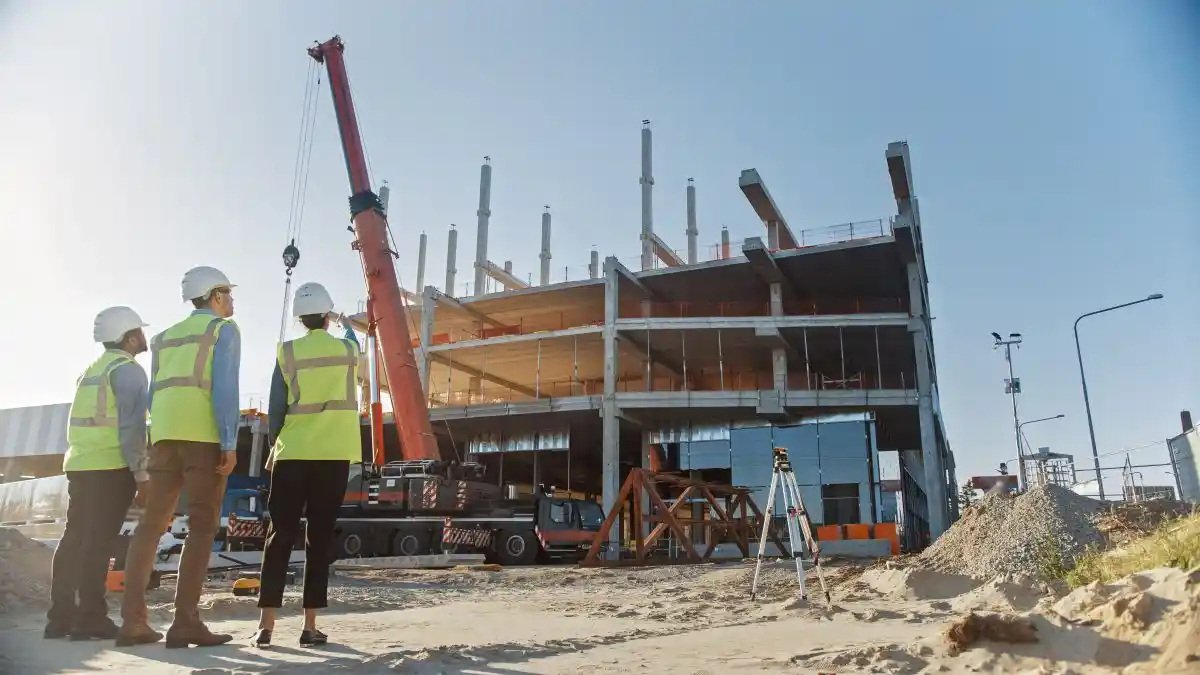
Instead of starting with crane tonnage, we look at how the job will actually happen. Where can the crane set up? Where can the heavy-haul trailer enter? How far does the boom need to reach? Does the work need to happen during a shutdown or restricted access period?
Maryland continues to identify life sciences, aerospace and defense, advanced manufacturing, clean energy, and related innovation sectors as areas where the state has a competitive advantage.
Call (877) 765-3574 to coordinate your Maryland crane rental.

Don't let logistics slow you down, we handle it all from permits to pickup. Speak to a live specialist today.
Maryland crane demand is especially concentrated around facilities that cannot simply stop operating while lifting work takes place.
Biotechnology and pharmaceutical facilities may need mechanical systems or production equipment installed around controlled work windows. Port and industrial sites deal with constant vehicle movement. Hospitals and research facilities may have restricted areas that limit crane setup.
Manufacturing programs in the state currently support sectors ranging from agribusiness and biomanufacturing to aerospace and defense.
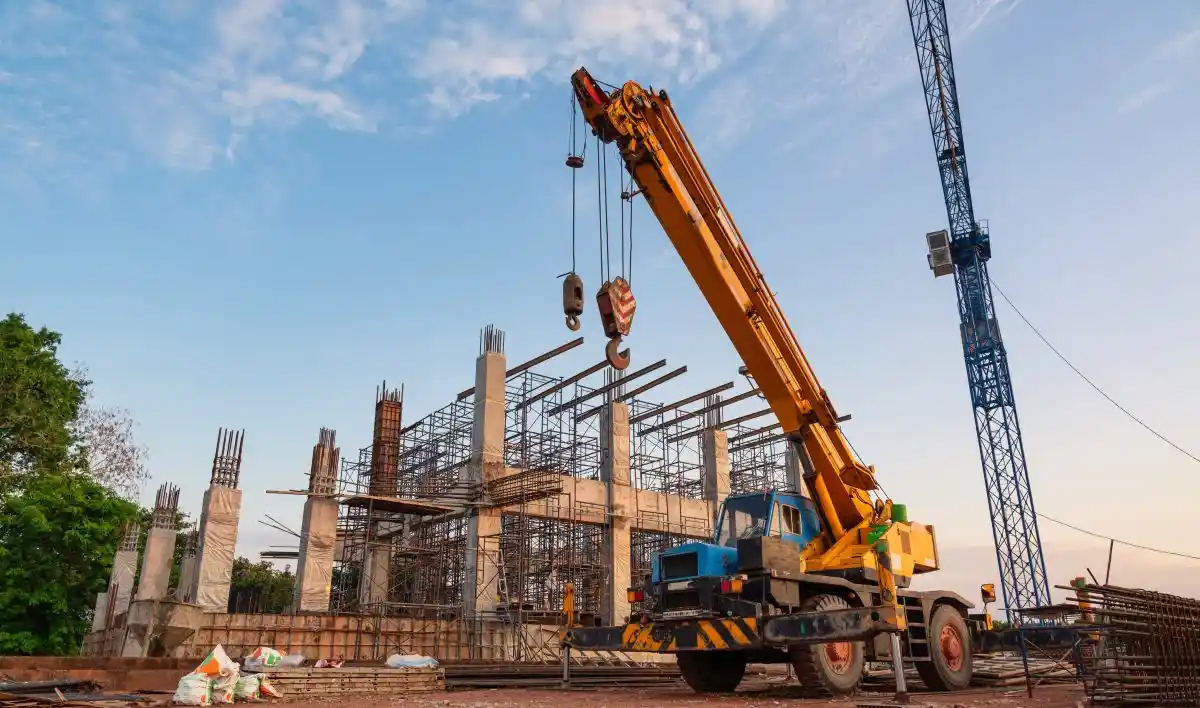
The same crane that works on an open industrial site may not be practical in downtown Baltimore or at an occupied research facility.
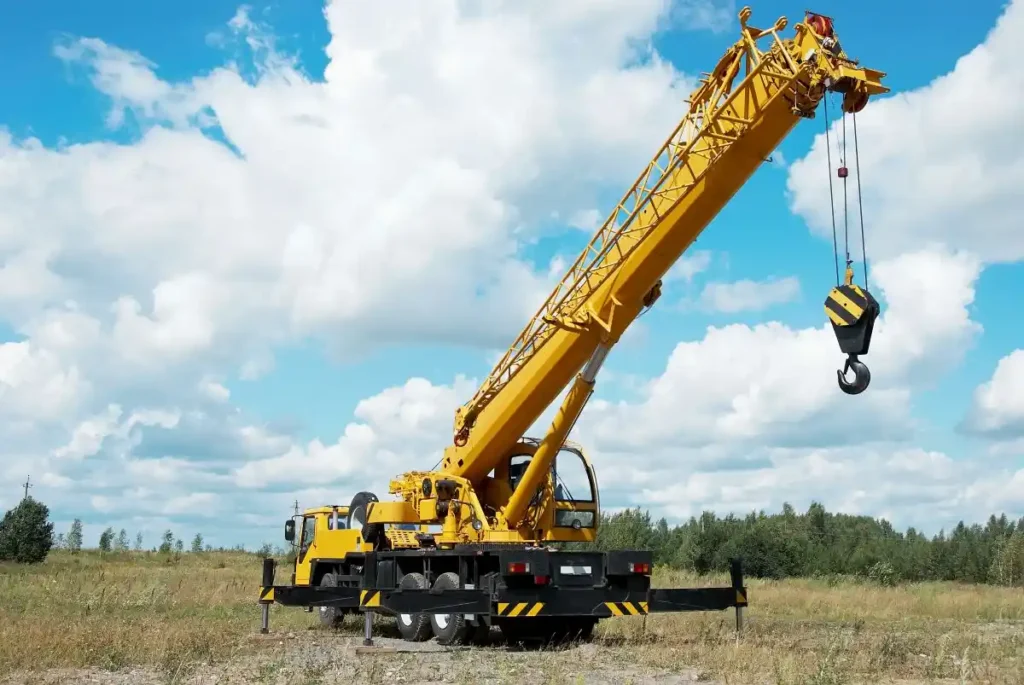
Maryland crane selection should account for site access, radius, setup area, traffic, ground conditions, placement height, and the support equipment needed to mobilize the crane.
What Is Rigging?
Rigging controls the load between its existing support and its new location.
That can involve much more than lifting straight up.
A production skid may need to stay level as it clears a trailer. A transformer may have fixed lifting points that determine sling placement. A fabricated component could require a beam to keep lifting forces from damaging the load.
The rigging should be planned around how the equipment needs to move through the entire pick.
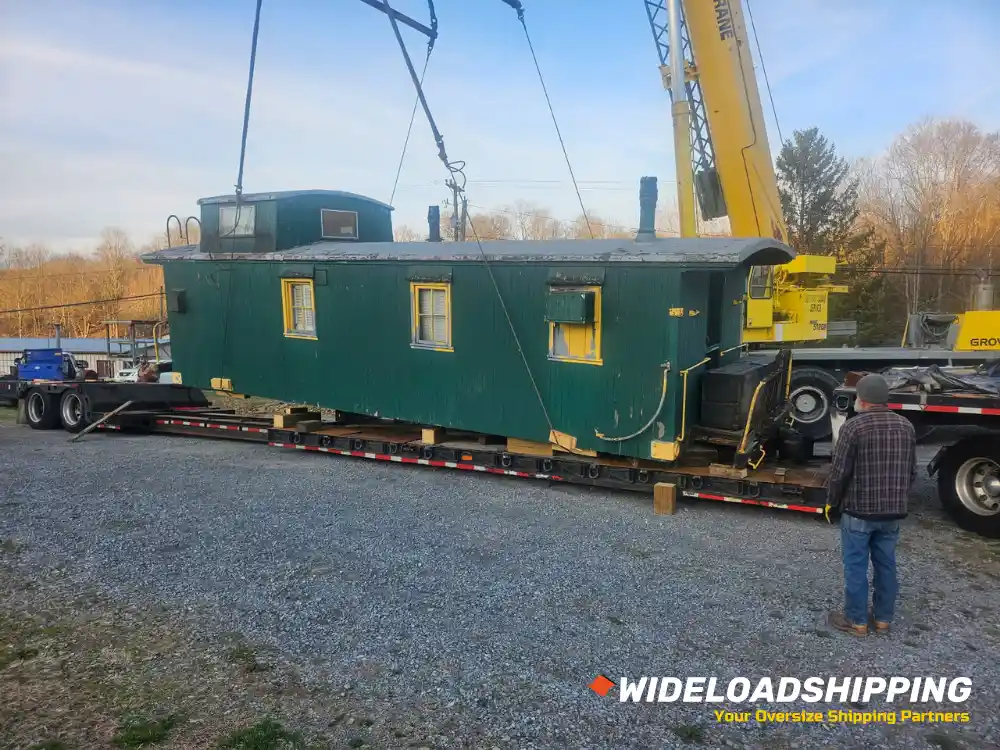
Maryland’s tight industrial and commercial sites make the handoff from transportation to crane especially important.
When the trailer can enter the site at the correct time and stop where the crane can reach it, the load may move directly into installation. That avoids taking up valuable property with temporary staging.
| Crane Type | Typical Rental Duration | Estimated Rental Price |
|---|---|---|
| Boom Truck Crane Rental | 1–7 Days | $900–$2,800 per day |
| Mobile Crane Rental | 1–14 Days | $1,200–$4,000 per day |
| Rough Terrain Crane Rental | 3–21 Days | $850–$3,100 per day |
| All Terrain Crane Rental | 1–30 Days | $2,800–$7,200 per day |
| Carry Deck Crane Rental | 1–14 Days | $550–$1,900 per day |
These are estimated budgeting ranges rather than fixed Maryland rates.
Traffic restrictions, operator labor, rigging, mobilization, street access, permits, support trucks, counterweights, and minimum site time can all change the final cost.
A short lift on a difficult urban site can cost more to organize than a longer lift on an open industrial property.

| Crane Type | Typical Rental Duration | Estimated Monthly Rental Price |
|---|---|---|
| Mobile Crane Rental | 1–3 Months | $10,000–$22,000 per month |
| Rough Terrain Crane Rental | 1–4 Months | $8,000–$16,000 per month |
| All Terrain Crane Rental | 2–6 Months | $20,000–$44,000 per month |
| Crawler Crane Rental | 3–12 Months | $22,000–$75,000+ per month |
| Tower Crane Rental | 6–18 Months | $16,000–$38,000+ per month |
Multi-phase Maryland construction and infrastructure projects may keep a crane productive long enough for a monthly arrangement to make sense.
Before comparing long-term prices, verify who is responsible for the operator, transportation, assembly, maintenance, inspections, counterweights, rigging, engineering, and permits.

| Maryland City | Primary Industries Driving Crane Rental Demand |
|---|---|
| Baltimore | Ports, manufacturing, healthcare, commercial construction |
| Frederick | Life sciences, advanced manufacturing, healthcare |
| Rockville | Biotechnology, research, commercial development |
| Gaithersburg | Life sciences, technology, manufacturing |
| Annapolis | Marine work, infrastructure, government construction |
| Hagerstown | Manufacturing, logistics, industrial facilities |
| Salisbury | Food processing, healthcare, agriculture |
| Aberdeen | Defense-related industry, logistics, infrastructure |
| Laurel | Utilities, technology, commercial construction |
| College Park | Research, institutional construction, technology |
Maryland crane demand changes noticeably by region.
Baltimore has port and industrial lifting mixed with dense construction. Frederick and Montgomery County markets are more closely tied to life sciences and advanced facilities. Hagerstown adds manufacturing and distribution, while the Eastern Shore has more food production, agriculture, infrastructure, and utility work.
| Lift Application | Common Crane Capacity |
|---|---|
| Life Sciences Equipment | 40–250 Ton Cranes |
| Pharmaceutical Process Equipment | 40–250 Ton Cranes |
| Port and Terminal Equipment | 100–500+ Ton Cranes |
| Advanced Manufacturing Machinery | 60–300 Ton Cranes |
| Structural Steel | 80–300 Ton Cranes |
| Utility Transformers | 80–250 Ton Cranes |
| Data Center Equipment | 60–250 Ton Cranes |
| Bridge Work | 150–500+ Ton Cranes |
| Healthcare Mechanical Systems | 40–200 Ton Cranes |
| Commercial HVAC | 40–120 Ton Cranes |
These ranges are useful for planning, but the lift radius and setup location ultimately determine the crane class.
| Industry | Primary Crane Rental Applications |
|---|---|
| Life Sciences | Process equipment, mechanical systems, facility expansion |
| Biomanufacturing | Production machinery, tanks, structural equipment |
| Advanced Manufacturing | Machinery installation, plant improvements |
| Aerospace and Defense | Facility equipment, structural systems, machinery |
| Ports | Terminal equipment, industrial components, infrastructure |
| Clean Energy | Electrical equipment, structural components |
| Data Centers | Generators, cooling systems, transformers |
| Utilities | Substations, transformers, power equipment |
| Healthcare | Mechanical systems, additions, rooftop equipment |
| Infrastructure | Bridges, transportation systems, public works |
Maryland is continuing to fund manufacturing modernization and innovation infrastructure, including projects connected to biomanufacturing, aerospace, defense, and other advanced sectors.
For contractors and facility teams, those investments eventually translate into equipment that has to be delivered, lifted, installed, and maintained.
| Service Type | Typical Scheduling Time |
|---|---|
| Emergency Crane Rental | Same Day, When Available |
| Standard Mobile Crane Rental | 24–72 Hours |
| Boom Truck Crane Rental | 24–48 Hours |
| Rough Terrain Crane Rental | 2–5 Days |
| All Terrain Crane Rental | 3–7 Days |
| Heavy Lift Crane Rental | 3–10 Days |
| Crawler Crane Rental | 1–2 Weeks |
| Tower Crane Projects | Several Weeks to Months |
| Operated Crane Rental | 24–72 Hours |
| Bare Crane Rental | 2–7 Days |
Maryland crane availability can be good, but access may require more preparation than the equipment itself.
Permits, traffic control, street occupancy, support-load staging, facility restrictions, and work-hour limitations can all increase lead time.
Major Baltimore-area, port, or infrastructure lifts should be planned well before the requested pick date.
Yes. Baltimore lifts can require additional planning for traffic, staging, street access, ports, occupied facilities, and limited setup space.
Yes. Production systems, process equipment, mechanical systems, utility equipment, and facility expansions can all require crane support.
Yes. Heavy machinery, transformers, generators, fabricated components, and other oversized loads can be coordinated around the crane schedule.
When site conditions allow it, yes. Direct transfer can reduce rehandling and temporary storage.
Yes. High-capacity equipment can be coordinated for qualifying port, infrastructure, utility, industrial, and major construction projects.
Yes. Terminal systems, industrial equipment, structural components, utilities, and other heavy port loads can require crane placement.
Yes. Crane and transport timing can be planned around maintenance periods, shutdowns, controlled access windows, and production schedules.
Provide the equipment weight and dimensions, setup location, placement point, working radius, lift date, site access information, and known rigging requirements.
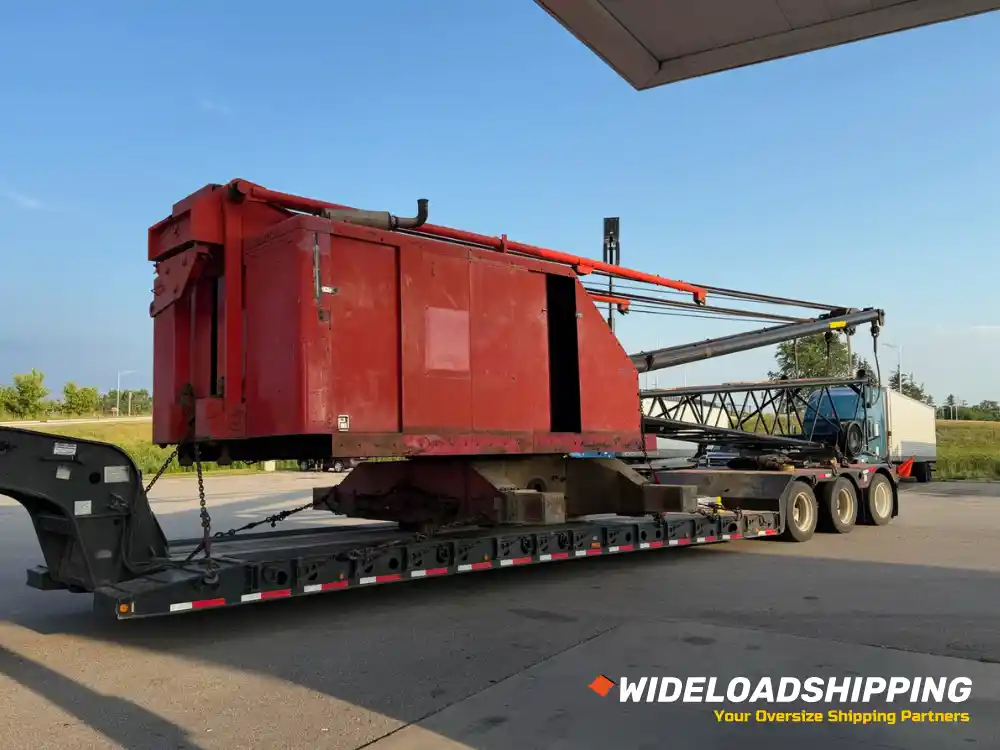
Maryland projects frequently involve a lot of activity packed into a small amount of space.
The machinery may be traveling through heavy traffic. Your facility may only give the crew a short access window. The crane might have one workable setup location and no room for the load to sit nearby.
Wide Load Shipping can coordinate the transportation around those constraints.
By connecting the equipment move with the crane and rigging schedule, we help reduce the chance that one part of the job reaches the site before the rest is ready.
Call (877) 765-3574 to coordinate your Maryland crane rental.